
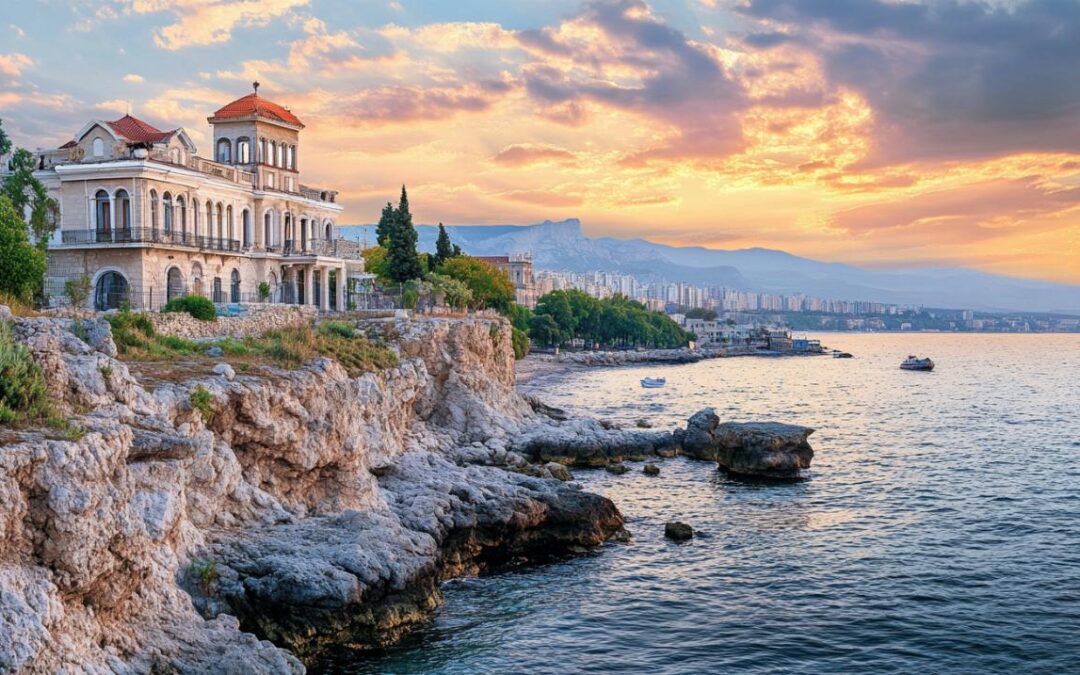
Nestled along the western shores of Crimea, Eupatoria stands as a testament to the turbulent history of empires vying for dominance over strategic territories. This coastal settlement, with its ancient roots stretching back millennia, became an unexpected theatre of war during the mid-nineteenth century when the great powers of Europe and Asia clashed in a conflict that would reshape the balance of power across the continent. The events that unfolded here between 1854 and 1856 transformed a modest port town into a military stronghold, leaving an indelible mark on both the landscape and the collective memory of those who call this place home.
A strategic coastal settlement: eupatoria's ancient roots and geographic significance
From Greek Colony to Ottoman Gateway: The Historical Foundations of a Black Sea Port
The story of Eupatoria begins long before the modern era, with its origins tracing back to ancient Greek colonisation of the Black Sea region. Established as a trading outpost, the settlement benefited from its position along maritime routes that connected the Mediterranean world with the vast steppes beyond. Over centuries, control of this harbour passed through numerous hands, reflecting the broader patterns of conquest and cultural exchange that characterised the region. By the time the Ottoman Empire extended its influence across Crimea, Eupatoria had evolved into a modest but significant port, serving as a gateway between the Islamic world and the Christian powers to the north and west. The town's population, comprising diverse ethnic and religious communities, reflected this complex heritage. Muslim, Christian, and Jewish inhabitants coexisted within its walls, creating a cosmopolitan atmosphere that belied the settlement's relatively small size of approximately thirteen thousand residents by the middle of the nineteenth century.
Geographic Positioning and Naval Advantages: Why Empires Fought for Control of This Harbour
The geographic attributes of Eupatoria made it a prize worth fighting for when tensions between Russia and the Ottoman Empire erupted into open warfare in 1853. The harbour offered a natural anchorage suitable for large fleets, whilst the surrounding terrain provided relatively flat approaches that facilitated the movement of troops and supplies. Unlike the heavily fortified Sevastopol further along the coast, Eupatoria lacked substantial defensive works and maintained only a modest garrison, making it vulnerable to amphibious assault. For commanders planning a major military operation in Crimea, these characteristics presented both opportunity and challenge. The absence of natural barriers meant that forces landing at Eupatoria could potentially advance inland with relative ease, yet this same openness left the port exposed to counterattack. The decision by allied commanders to use Eupatoria as a staging point for their campaign against Russian positions in Crimea would prove momentous, transforming the quiet port into a bustling military encampment that hosted tens of thousands of soldiers and hundreds of warships.
The Crimean War Arrives: Eupatoria's Transformation into a Military Stronghold
Allied Forces Landing at Eupatoria: The Turkish and Allied Garrison of 1854-1855
In September 1854, the waters off Eupatoria witnessed an extraordinary spectacle as approximately sixty thousand troops from Britain, France, and the Ottoman Empire disembarked onto Crimean soil, supported by a massive fleet of warships. The allies had sailed from Varna with the intention of striking at Russian power in the region, and Eupatoria served as their initial foothold. Within days, the town underwent a dramatic transformation as military engineers divided it into distinct national sectors. French forces occupied one quarter, British troops another, whilst Ottoman soldiers established themselves in a third zone. This arrangement reflected both practical considerations of command structure and the complex diplomatic relationships that bound the alliance together. The sudden influx of foreign soldiers overwhelmed the existing infrastructure, as the population swelled from its peacetime level to accommodate the massive military presence. Supplies, ammunition, and equipment piled up along the waterfront as quartermasters struggled to organise the logistics of an army preparing for a major campaign. The harbour became a forest of masts and funnels as transport vessels and warships jostled for position. For the residents of Eupatoria, daily life became intertwined with the rhythms of military operations, as sentries patrolled the streets and officers requisitioned buildings for use as headquarters and hospitals.
The Battle of Eupatoria: Russian Assault and the Defence That Shaped the War's Outcome
The Russian high command could not permit such a substantial enemy presence to remain unchallenged. As winter descended upon Crimea, plans were laid for a bold strike against the allied garrison at Eupatoria. In February 1855, approximately nineteen thousand Russian troops advanced on the port, hoping to overwhelm the defenders and disrupt the allied supply lines that sustained the siege operations at Sevastopol. The assault, however, encountered difficulties from the outset. Intelligence regarding the strength and disposition of the defending forces proved inaccurate, and logistical problems hampered the attackers. Trenches that should have provided cover instead filled with water, rendering them useless, whilst scaling ladders proved inadequate for their intended purpose. The defenders, forewarned and well-prepared, repelled the assault with determined resistance. Turkish forces under the command of General Selim Pasha fought with particular tenacity, though the general himself fell during the engagement. When the Russian troops withdrew, they left behind approximately two hundred dead, their bodies later interred in a mass grave that would become a site of commemoration. The failed assault had consequences that extended beyond the immediate military situation. Emperor Nicholas the First, already under immense strain from the broader course of the war, succumbed to illness shortly after receiving news of the defeat. Whether the psychological impact of this setback contributed to his decline remains a matter of historical speculation, but contemporaries noted the timing with interest. The victory at Eupatoria bolstered allied morale and confirmed the strategic value of maintaining control over the port.
Legacy of conflict: how imperial struggles shaped modern eupatoria's identity
From Battlefield to Resort: The Post-War Development and Demographic Shifts
When the last allied soldiers departed Eupatoria in May 1856, following the signing of the Treaty of Paris in March of that year, the town faced the challenge of rebuilding and redefining its identity. The physical scars of military occupation gradually faded as civilian life resumed, yet the experience of hosting such a massive international presence had left lasting impressions. The infrastructure improvements necessitated by the military campaign, particularly those related to the harbour facilities, provided a foundation for subsequent economic development. Over the following decades, Eupatoria evolved from a war-scarred port into a fashionable resort destination, attracting visitors drawn by the climate and coastal setting. The demographic composition of the town continued to shift as patterns of migration and settlement reflected broader political changes affecting Crimea. The multicultural character that had long defined Eupatoria persisted, though the relative proportions of different communities fluctuated in response to imperial policies and economic opportunities. The transformation from military stronghold to leisure destination exemplified the resilience of communities capable of adapting to radically altered circumstances.
Remembering the Fallen: Military Heritage and Historical Memory in Contemporary Eupatoria
The memory of the Crimean War remained alive in Eupatoria through monuments and commemorative practices that sought to honour those who had fought and died during that turbulent period. In 1858, authorities erected a monument over the mass grave where Russian soldiers who perished during the February assault were buried. This memorial served as a focal point for remembrance, acknowledging the sacrifice of those who had attempted to recapture the town. Four decades later, in 1899, a cathedral dedicated to Saint Nicholas rose on the site of an earlier dilapidated church, further embedding the memory of the conflict within the sacred landscape of the community. These acts of commemoration reflected a desire to integrate the traumatic events of 1854 through 1856 into a coherent narrative of local and national identity. In more recent years, the establishment of a museum dedicated to the history of the Crimean War has provided a venue for visitors and residents alike to engage with this complex heritage. The museum collections and exhibitions offer insights into the daily experiences of soldiers and civilians during the conflict, preserving artefacts and documents that might otherwise have been lost. Beyond the borders of Crimea, the memory of Eupatoria's role in the war persists in unexpected places. In Paris, a street bearing the name Rue d'Eupatoria serves as a reminder of the alliance that brought French forces to this distant shore, memorialising a conflict that presaged the larger conflagrations of the twentieth century. These scattered memorials and commemorations collectively testify to the enduring significance of events that unfolded in a small port town, where the clash of empires left marks that time has not entirely erased.